

techccontdetaics Web Technologies March 30, 2026 40 5 minutes read

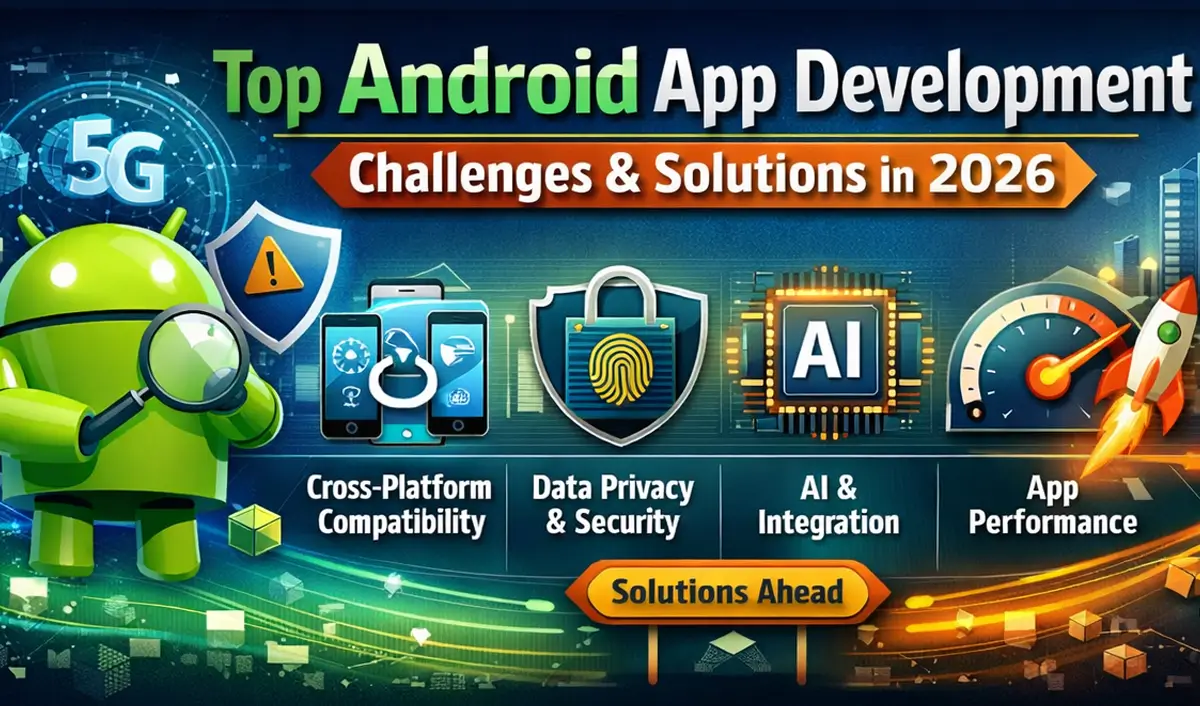
Top Android App Development Challenges & Solutions in 2026

The Android development landscape in 2026 is a paradox of opportunity and complexity. With over three billion active devices, the potential reach for an Android app is massive. However, the days of simply writing code that “works” are long gone. Today’s developers must navigate a minefield of security threats, rapid AI integration, device fragmentation, and evolving Google policies.

For businesses looking to build a robust Android presence—whether you’re a startup in Trichy or a global enterprise—understanding these hurdles is the first step toward success. At Tech C Mantix, a leading mobile app development company based in Trichy, we’ve seen firsthand how these challenges can make or break a digital product. Here are the top challenges facing Android developers in 2026 and proven strategies to overcome them.

Challenge 1

The “Client-Side Trust Gap” and Heightened Security Threats
Security is no longer just about writing safe code—it’s about surviving in real-world environments. Recent industry research indicates that 72% of organizations experienced at least one mobile app security incident in the past year. With 96% of developers using AI-assisted tools, new vulnerabilities are being introduced at an alarming rate—81% of developers admit AI-generated code has created fresh security risks. Furthermore, 65% of users have uninstalled apps due to security concerns.

The Solution: Shift from Assumption to Attestation

In 2026, relying solely on the OS for protection is a losing strategy. A multi-layered, proactive security approach integrated into the development lifecycle (DevSecOps) is essential.

Adopt a Zero-Trust Architecture

Assume every device environment is potentially hostile. Implement app attestation to ensure only genuine, unmodified apps can communicate with backend servers.

Runtime Protection (RASP)

Enable apps to protect themselves during execution. Instead of blocking rooted devices outright, use adaptive security measures like step-up verification.

Code Hardening

Obfuscate and secure your code to make reverse engineering extremely difficult.

Challenge 2

Mastering the AI-Driven Development Paradigm
AI has evolved from a “nice-to-have” feature to a core component of the Android experience. Users now expect apps to act as intelligent assistants rather than static tools. However, integrating AI without affecting performance or introducing bias remains a major challenge.

The Solution: Embrace On-Device and Agentic AI

On-Device Machine Learning

Use on-device models (like Gemini Nano) for tasks such as summarization and smart replies. This improves privacy and reduces latency.

Agentic Frameworks

Build adaptive UI systems that respond dynamically to user intent using emerging frameworks and protocols.

AI-Assisted Development

Leverage AI tools for coding, debugging, and optimization—but maintain human oversight to avoid logical errors and vulnerabilities.

Challenge 3

Google’s New App Restrictions and Sideloading Policies
For the first time, Google is significantly tightening its policies. Starting September 2026, all apps installed on certified Android devices must be linked to a verified developer account. This includes mandatory identity verification and registration requirements.

The Solution: Prioritize Compliance and Credibility

Maintain Accurate Developer Information

Ensure your account details align with your legal business identity.

Build Brand Trust

Verified developer status will act as a credibility marker—highlight it in your app listings.

Plan Enterprise Distribution Carefully

Ensure internal apps and sideloading methods comply with new verification policies.

Challenge 4

UI/UX Fragmentation (Foldables, Tablets, and Beyond)
Android’s diversity is both its strength and its biggest challenge. Developers must now design for foldables, tablets, and even desktop environments. Apps must adapt seamlessly across multiple screen sizes and device postures.

The Solution: Declarative UI with Jetpack Compose

Adopt Jetpack Compose

Its declarative approach enables flexible and adaptive UI design.

Test on Real Devices

Physical testing is crucial, especially for foldables and dynamic layouts.

Use Adaptive Layout Patterns

Implement responsive layouts like list-detail views that adjust across devices.

Challenge 5

The Cross-Platform Dilemma (Native vs. KMP vs. Flutter)
Businesses want faster launches across platforms without compromising quality. In 2026, Kotlin Multiplatform (KMP) is emerging as a strong solution for shared logic, while Flutter continues to excel in UI-driven applications.

The Solution: Share Logic, Not UI

Use Kotlin Multiplatform (KMP)

Share backend logic while keeping platform-specific UIs native.

Choose Flutter for Speed

Ideal for MVPs and highly customized UI experiences.

Adopt a Flexible Approach

Select the tech stack based on project requirements rather than a one-size-fits-all strategy.

Challenge 6

The Rise of mHealth and Regulatory Compliance
In sectors like healthcare and fintech, compliance requirements are becoming stricter. Healthcare-related cyberattacks have surged by 224%, making security and compliance non-negotiable.

The Solution: Compliance by Design

Prioritize Data Privacy

Follow best practices like data minimization and secure storage.

Ensure Tamper-Proof Systems

Protect critical workflows such as identity verification from manipulation.

Integrate Secure SDKs

Ensure third-party integrations meet the same security standards as your core app.

Conclusion: Turning Challenges into Competitive Advantages

The Android ecosystem in 2026 rewards preparation and precision. While challenges like security, AI integration, and fragmentation are real, they also create opportunities to stand out.
By adopting modern frameworks, ensuring compliance, and embedding security into every layer, you’re not just building an app—you’re building a trusted digital product.

Ready to Build Future-Ready Android Apps?

Look no further than Tech C Mantix. As a premier mobile app development company based in Trichy with a global presence since 2006, we specialize in building secure, scalable, and intelligent Android solutions tailored to your business needs.

Whether you need legacy modernization, advanced security integration, or AI-powered features, our expert team is here to guide you from concept to launch.

Don’t let 2026’s challenges slow your business down.
Partner with Tech C Mantix today for a free consultation—and let’s build the future together.

Share: